- Jul 22
Topical Agents for Post-Sclerotherapy Pigmentation: What the Evidence Supports
- Haroun Gajraj
- Microsclerotherapy, Sclerotherapy Complications
By Dr Haroun Gajraj | VeinCare Academy | 22nd July 2026
Written by Dr. Haroun Gajraj, GMC-registered Vascular Specialist, Founder & Board Member of the British Association of Sclerotherapists (BAS).
This review is written for healthcare professionals treating leg telangiectasias and reticular veins by Microsclerotherapy. It examines the published evidence for topical treatments of post-sclerotherapy pigmentation (PSP), and is deliberately restricted to topical agents. Prevention strategies and the full management algorithm, including deferoxamine mesylate and energy-based devices, are covered in a companion article next week.
This is Part 1 of a two-part series.
TL;DR for Busy Clinicians
PSP has two causes: haemosiderin (present in every case) and post-inflammatory melanin (present in a subset). Topical agents only address the melanin component.
No topical agent, including the standard triple combination cream, has been tested in a PSP-specific randomised controlled trial. The evidence is extrapolated from general post-inflammatory hyperpigmentation and melasma research.
Triple combination cream (hydroquinone, tretinoin, a topical corticosteroid) is the most established regimen for the melanin component, based on the modernised version of Kligman's 1975 formula.
Azelaic acid, kojic acid, topical retinoids, topical vitamin C, and Thiamidol all sit in the same evidence category: plausible, mechanistically supported, not PSP-specific.
Angiogel and similar products are commercially available but lack independently verified PSP-specific trial evidence.
Deferoxamine mesylate targets haemosiderin directly, but it is not a topical treatment. It is a systemic iron chelator used off-label for PSP, with a genuine safety profile.
Identifying the dominant pigment, haemosiderin or melanin, before choosing a treatment is the single most useful clinical step.
🎥 Prefer video? Watch the full review on YouTube: "Creams for Post-Sclerotherapy Pigmentation: What Actually Works? (Evidence Review))" [ click here ]
Contents
a. Introduction: two pigments, one problem
b. Why topical agents work better for some cases than others
c. Topical depigmenting agents: the PSP-specific and extrapolated evidence
d. Other products sometimes discussed: Thiamidol and Angiogel e. Deferoxamine mesylate: a related but non-topical option
f. Key clinical points g. Frequently asked questions h. References
a. Introduction: Two Pigments, One Problem
Post-sclerotherapy pigmentation (PSP) is the most commonly reported cosmetically significant adverse sequela of Microsclerotherapy, affecting an estimated 10 to 30% of patients short-term, and up to 73% when higher concentrations of polidocanol are used [1][5]. For patients who chose treatment specifically to improve the appearance of their legs, these brown marks can be more distressing than the original telangiectasias.
Two distinct pigments are responsible. Haemosiderin, an iron-protein complex, is present in every case and results from red cell extravasation and subsequent macrophage processing of haemoglobin [1][8]. In a significant subset of patients, a second pigment, post-inflammatory melanin, is also present. Bossart and colleagues confirmed haemosiderin in all 20 biopsies examined in their histopathological study, with increased dermal melanin identified in 7 of the 20 [8].
This matters clinically because the two pigments respond to different treatments. Most conventional depigmenting agents target melanin production through tyrosinase inhibition. They have very limited effect on haemosiderin, which is not a melanocytic pigment at all. This is the central reason why topical treatment of established PSP has a mixed and, in places, weak evidence base.
b. Why Topical Agents Work Better for Some Cases Than Others
Because two distinct pigments are involved, identifying the dominant pigment is essential before selecting a treatment strategy [8]. Topical depigmenting agents are generally considered where the post-inflammatory melanin component is prominent, and are less effective for pure haemosiderin deposits [2][3][8].
In practice this means topical agents are most rational for patients with darker Fitzpatrick skin types (III to VI), where melanocytes are more reactive to inflammatory stimuli, or where clinical review suggests a melanin contribution alongside the expected haemosiderin staining [2][8].
c. Topical Depigmenting Agents: The PSP-Specific and Extrapolated Evidence
It is worth being explicit about the evidence tier for each agent, because the strength of evidence varies considerably.
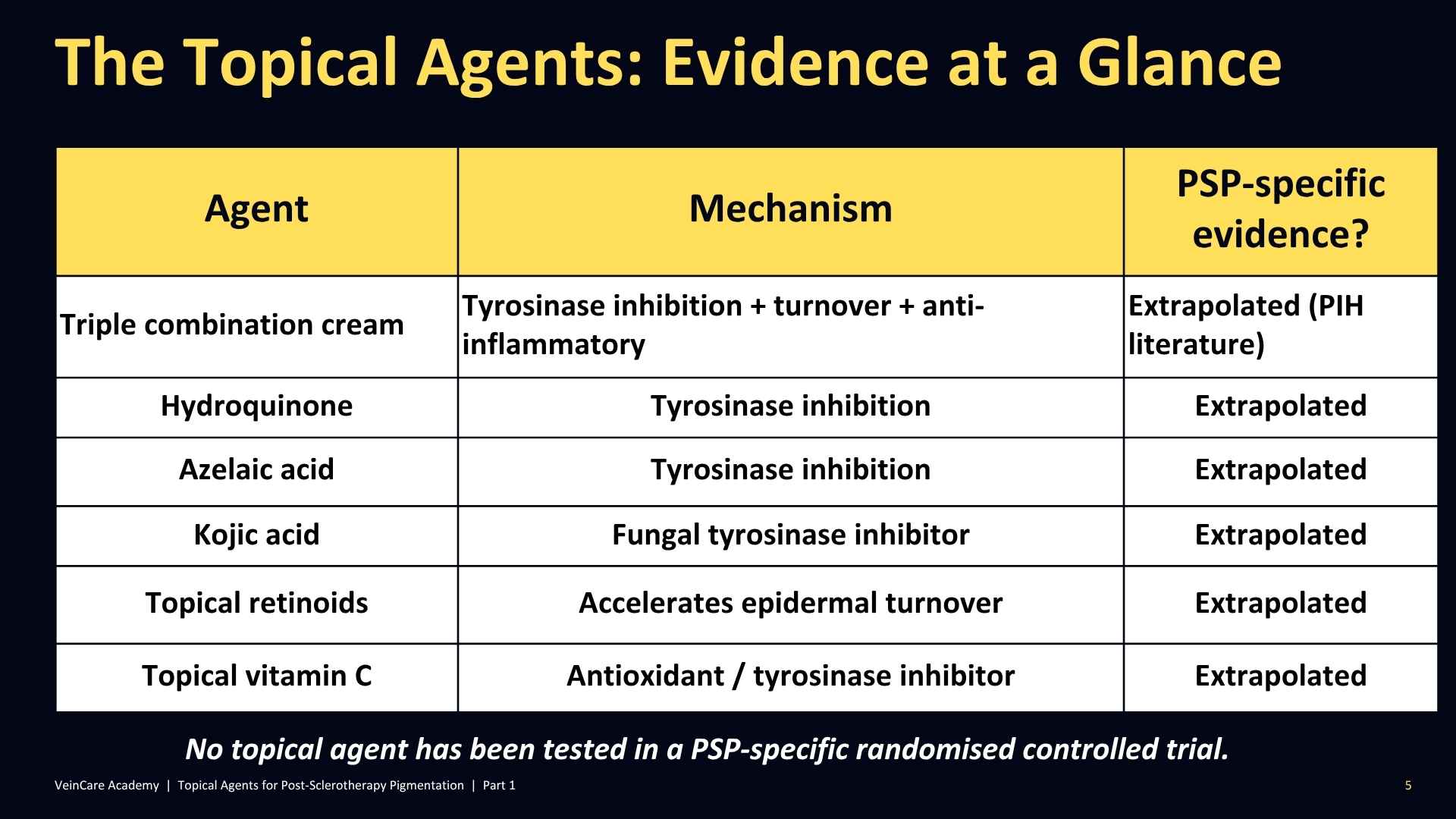
Figure 1: Summary of topical agents and their mechanisms of action in post-sclerotherapy pigmentation (PSP). Note that no topical agent currently has PSP-specific randomized trial evidence.
Triple combination cream (Kligman's formula). This regimen was first described by Kligman and Willis in 1975, using hydroquinone 5%, tretinoin 0.1%, and dexamethasone 0.1%, and was shown to be effective for melasma, ephelides, and post-inflammatory hyperpigmentation [29]. Contemporary practice typically uses a modernised version of this same three-component principle, commonly hydroquinone 4%, tretinoin 0.05%, and a topical corticosteroid such as mometasone furoate 0.1%. This regimen suppresses melanin synthesis, accelerates epidermal turnover to remove pigmented keratinocytes, and limits irritant reactions from hydroquinone alone. It is widely regarded as the standard topical regimen for post-inflammatory hyperpigmentation generally. It is important to be clear that this evidence is extrapolated from post-inflammatory hyperpigmentation research rather than from PSP-specific trials; no randomised study has tested this regimen in patients with post-sclerotherapy pigmentation specifically.
Hydroquinone as a single agent. Hydroquinone has been mentioned in the PSP literature as one of the bleaching approaches used historically, but without controlled PSP-specific trial data [1]. Its mechanism, tyrosinase inhibition, means its relevance is strongest where a mixed melanin component is suspected, rather than for pure iron-brown haemosiderin staining [7][8].
Azelaic acid (15 to 20%). Azelaic acid inhibits tyrosinase and has an inhibitory effect on abnormally active melanocytes [30]. As with the other agents in this section, the supporting citation is a general dermatology mechanism review rather than a PSP-specific clinical trial. It can reasonably be discussed as a plausible adjunct where melanin is thought to be contributing, with that caveat stated clearly to patients and colleagues.
Kojic acid (1 to 4%). A fungal tyrosinase inhibitor, often used in combination formulations [31]. Again, this is mechanistic and general dermatological evidence, not PSP-specific data.
Topical retinoids (tretinoin, adapalene). These accelerate epidermal cell turnover and help disperse melanin granules [32]. The evidence base here is the same as for the other agents above: extrapolated from general post-inflammatory hyperpigmentation and melasma literature.
Topical vitamin C (ascorbic acid). An antioxidant and tyrosinase inhibitor that reduces the oxidative conversion of tyrosine to melanin [31]. As above, this is mechanistic rather than PSP-specific evidence.
The honest summary for this section: no topical agent has been tested in a PSP-specific randomised controlled trial. What we have is a well-established, widely used regimen for post-inflammatory hyperpigmentation in general dermatology, applied to PSP on the reasonable but unproven assumption that the melanin component of PSP behaves similarly to melanin deposited by other inflammatory mechanisms. That assumption is plausible. It has not been tested directly.
d. Other Products Sometimes Discussed: Thiamidol and Angiogel
Two further products come up regularly in clinical conversation and are worth addressing directly, separately from the evidence set above.
Thiamidol (isobutylamido thiazolyl resorcinol) is a highly specific tyrosinase inhibitor with reasonable mechanistic and clinical evidence in melasma and post-inflammatory hyperpigmentation more broadly [11][12][13][14][15]. It has not been studied directly in PSP. As with the agents above, it is reasonable to mention as an indirect, melanin-targeted option, with the evidence explicitly labelled as extrapolated rather than PSP-specific.
Angiogel and similar haemosiderin-directed dermocosmetics are marketed for post-haematoma and post-procedural yellow-brown staining, with claimed iron-chelating or haemosiderin-clearing effects. No independently verified, PubMed-indexed PSP-specific clinical trial evidence was identified for these products. They should be discussed as commercially available products of interest rather than as evidence-based therapies [16].
e. Deferoxamine Mesylate: A Related but Non-Topical Option
Deferoxamine mesylate (DFO) is worth mentioning here because it is sometimes discussed alongside topical agents, but it is important to be clear that it is not a topical treatment, and it is not licensed for this indication.
DFO is a systemic iron-chelating agent licensed for the treatment of acute iron intoxication and chronic transfusional iron overload, administered by intramuscular injection, intravenous infusion in cardiovascular collapse, or slow subcutaneous infusion via a pump, typically over 8 to 12 hours.* Its use in PSP, whether by subcutaneous bolus injection or intradermal mesotherapy, is off-label, both in indication and in the manner of administration.
The rationale for its use in PSP is that, unlike the melanin-targeted topical agents above, DFO directly chelates iron and therefore targets the haemosiderin component of PSP that topical agents cannot reach [33].
The evidence is limited. Lopez and colleagues demonstrated that, in a treated group of 36 patients, weekly subcutaneous DFO 500 mg injections achieved depigmentation in a mean of 27 to 46 days, compared with 150 to 255 days in untreated controls [34]. Mello Netto and colleagues described a small case series of three patients treated with monthly intradermal DFO mesotherapy, in which two patients achieved satisfactory pigmentation lightening after three sessions and the third required four sessions to reach adequate lightening [35]. This is a really useful signal, but it remains a very small case series, not a randomised trial, and should be read as such.
Deferoxamine also carries a real safety profile that is worth naming plainly. Recognised adverse effects include hypersensitivity and anaphylactoid reactions, injection site reactions, and, with prolonged or high-dose systemic use, ototoxicity and ocular toxicity. These risks are best characterised in the context of long-term systemic chelation therapy for iron overload, but they underline that this is a drug requiring proper prescribing discipline and informed consent, not an inert topical cream.
We will return to DFO in more detail, alongside the wider management algorithm, in next week's article.
*Licensing and administration information is drawn from the current UK and US prescribing information for deferoxamine mesylate (Desferal), not from the PSP-specific references above.
f. Key Clinical Points
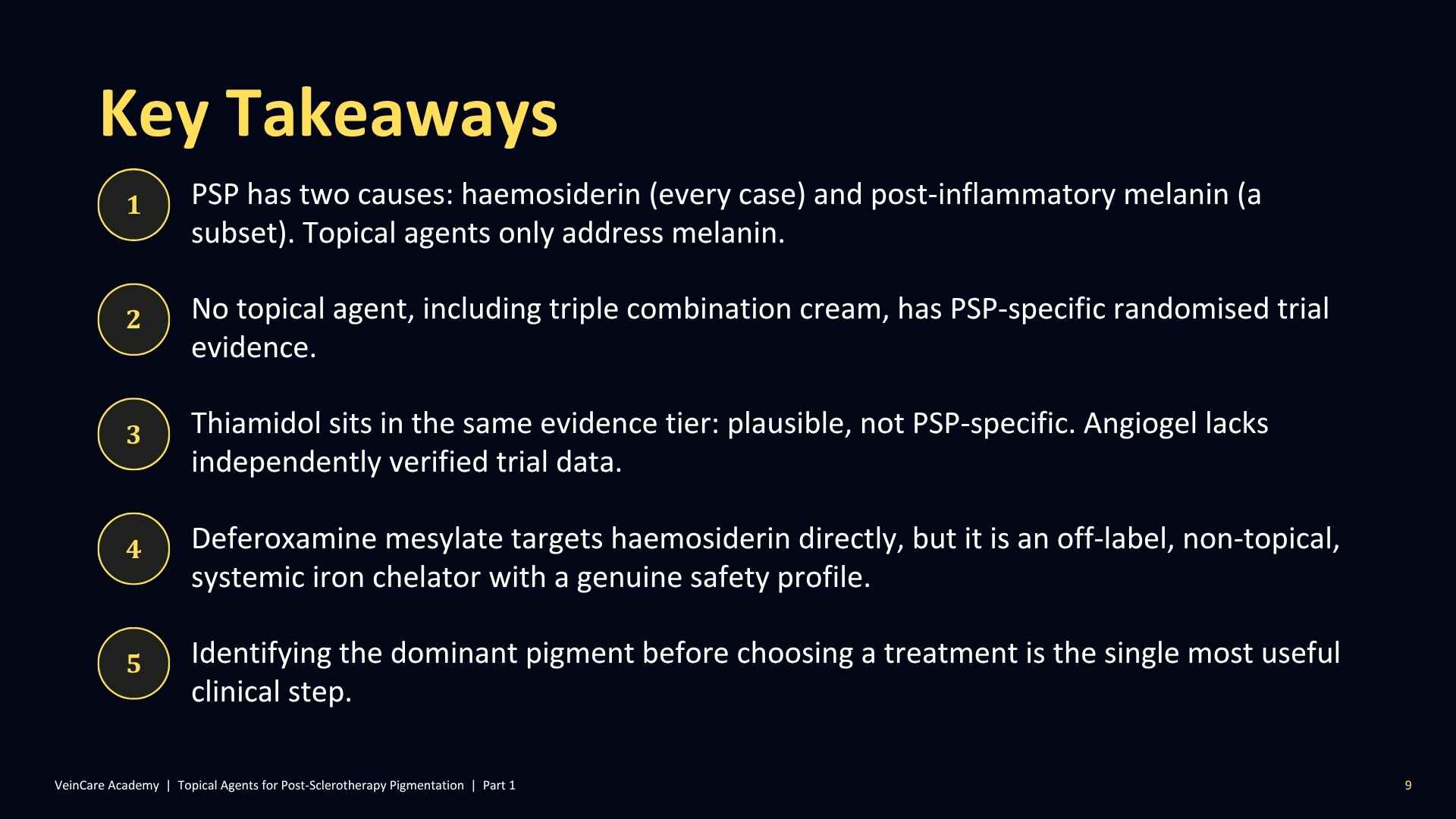
Figure 2: Key clinical takeaways regarding topical agents and targeted therapies for post-sclerotherapy pigmentation (PSP).
PSP comprises two distinct pigments: haemosiderin, present in every case, and post-inflammatory melanin, present in a significant subset [1][8].
Topical depigmenting agents target the melanin component. They are less effective for pure haemosiderin staining [2][3][8].
No topical agent has PSP-specific randomised controlled trial evidence. The triple combination cream, azelaic acid, kojic acid, topical retinoids, and vitamin C are all supported by general post-inflammatory hyperpigmentation or melasma literature, extrapolated to PSP.
Thiamidol sits in the same evidentiary category: plausible, mechanistically supported, but not PSP-specific.
Angiogel and similar products are commercially available but lack independently verified PSP-specific trial evidence.
Deferoxamine mesylate is a systemic iron chelator used off-label for PSP. It targets haemosiderin directly but is not a topical agent, and carries a genuine safety profile requiring appropriate prescribing discipline.
Identifying the dominant pigment, haemosiderin or melanin, before selecting a treatment strategy is the single most useful clinical step [8].
Next week: prevention strategies and the full staged management algorithm for PSP, drawn from Gajraj and Oliver's peer-reviewed review in the Journal of Sclerotherapy.
g. Frequently Asked Questions
Is any topical cream actually proven to work for post-sclerotherapy pigmentation specifically?
No. No topical agent, including triple combination cream, has been tested in a randomised controlled trial for PSP specifically. The evidence base is extrapolated from general post-inflammatory hyperpigmentation and melasma research. That does not mean these agents are ineffective, but it does mean the evidence is indirect, and this should be communicated honestly to patients and colleagues.
Which patients are the best candidates for topical treatment?
Topical agents are most rational where a melanin component is suspected alongside the expected haemosiderin staining, typically in darker Fitzpatrick skin types (III to VI), where melanocytes are more reactive to inflammatory stimuli. For patients whose pigmentation looks like pure haemosiderin staining, with no melanin features, topical depigmenting agents are less likely to help.
How can I tell whether haemosiderin or melanin is dominant?
This review does not set out a formal clinical grading tool for this. The general principle from the histopathological literature is that haemosiderin is present in every case, while melanin is an additional feature in a subset. Clinical judgement, skin type, and the character of the staining all inform this assessment. We discuss this further in next week's companion article on prevention and management.
Is deferoxamine mesylate a topical treatment?
No. It is a systemic iron-chelating agent licensed for acute iron intoxication and chronic transfusional iron overload, given by intramuscular injection, intravenous infusion, or slow subcutaneous pump infusion. Its use for PSP, whether by subcutaneous bolus injection or intradermal mesotherapy, is off-label in both indication and administration route. It targets haemosiderin directly, which topical agents cannot do, but it carries a genuine safety profile and is not an alternative to a topical cream.
Should I recommend Thiamidol or Angiogel to patients?
Thiamidol has reasonable mechanistic and clinical evidence in melasma and post-inflammatory hyperpigmentation generally, but has not been studied directly in PSP. Angiogel is a commercially available product with claimed iron-chelating effects, but no independently verified PSP-specific trial evidence was identified for it. Both can be discussed with patients as options, but neither should be presented as proven PSP-specific therapy.
How long should topical treatment be trialled before considering other options?
This article does not set out a specific time-based protocol for topical agents. The staged management algorithm, including when to move on to deferoxamine mesylate or energy-based devices such as Q-switched Nd:YAG laser or IPL, is covered in next week's companion article.
h. References
Goldman MP, Kaplan RP, Duffy DM. Postsclerotherapy hyperpigmentation: a histologic evaluation. J Dermatol Surg Oncol. 1987;13(5):547-550. PMID: 3571692. https://pubmed.ncbi.nlm.nih.gov/3571692/
Goldman MP, Sadick NS, Weiss RA. Cutaneous necrosis, telangiectatic matting, and hyperpigmentation following sclerotherapy: etiology, prevention, and treatment. Dermatol Surg. 1995;21(1):19-29. PMID: 7600016. https://pubmed.ncbi.nlm.nih.gov/7600016/
Bentivedo A, De Ruggieri G, Floris M, Mastrangeli MR. When sclerotherapy leaves its mark: prevention and management of cutaneous complications. Veins and Lymphatics. 2026;15.
Bossart S, Daneluzzi C, Cazzaniga S, Ramelet AA, Uthoff H, Seyed Jafari SM, et al. Skin hyperpigmentation after sclerotherapy with polidocanol: a systematic review. J Eur Acad Dermatol Venereol. 2023;37:274-283. PMID: 36196455. https://pubmed.ncbi.nlm.nih.gov/36196455/
Searle T, Al-Niaimi F, Ali FR. Hydroquinone: myths and reality. Clin Exp Dermatol. 2021;46(4):636-640. PMID: 33159818. https://pubmed.ncbi.nlm.nih.gov/33159818/
Bossart S, Ramelet AA, Seyed Jafari SM, Yawalkar N, Feldmeyer L, Heidemeyer K. Revealing the origin of postsclerotherapy hyperpigmentation: identification of melanin and hemosiderin as causative pigments in a histopathological study. Phlebology. 2026;41:217-223. PMID: 40586436. https://pubmed.ncbi.nlm.nih.gov/40586436/
Mann T, Gerwat W, Batzer J, et al. Inhibition of human tyrosinase requires molecular motifs distinctively different from mushroom tyrosinase. J Invest Dermatol. 2018;138(7):1601-1608. PMID: 29427586. https://pubmed.ncbi.nlm.nih.gov/29427586/
Philipp-Dormston WG, Trookman NS, Mezzana P, et al. Thiamidol containing treatment regimens in facial hyperpigmentation: an international multi-centre approach consisting of a double-blind, controlled, split-face study and of an open-label, real-world study. Int J Cosmet Sci. 2020. PMID: 32390164. https://pubmed.ncbi.nlm.nih.gov/32390164/
Roggenkamp D, Falkenstein D, Kopperud R, et al. Effective reduction of post-inflammatory hyperpigmentation with the tyrosinase inhibitor isobutylamido-thiazolyl-resorcinol (Thiamidol). Int J Cosmet Sci. 2021. PMID: 33559186. https://pubmed.ncbi.nlm.nih.gov/33559186/
Klein PA, Kincaid C, Babadjouni A, Mesinkovska NA. Isobutylamido thiazolyl resorcinol (Thiamidol) for combatting hyperpigmentation: a systematic review of clinical studies. J Drugs Dermatol. 2024;23(11):986-991. PMID: 39496126. https://pubmed.ncbi.nlm.nih.gov/39496126/
Frey C, Grimes P, Callender VD, et al. Thiamidol: a breakthrough innovation in the treatment of hyperpigmentation. J Drugs Dermatol. 2025;24(6):608-616. PMID: 40465503. https://pubmed.ncbi.nlm.nih.gov/40465503/
Angiogel/Trofolastin product information and retail material were reviewed for relevance but were not retained as evidence-based medical references, because independently verified PubMed-indexed PSP clinical trial data were not identified.
Kligman AM, Willis I. A new formula for depigmenting human skin. Arch Dermatol. 1975;111(1):40-48. PMID: 1119822. https://pubmed.ncbi.nlm.nih.gov/1119822/
Sauer N, Oslizlo M, Brzostek M, Wolska J, Lubaszka K, Karlowicz-Bodalska K. The multiple uses of azelaic acid in dermatology: mechanism of action, preparations, and potential therapeutic applications. Postepy Dermatol Alergol. 2023;40:716-724. PMID: 38282869. https://pubmed.ncbi.nlm.nih.gov/38282869/
Zolghadri S, Bahrami A, Hassan Khan MT, et al. A comprehensive review on tyrosinase inhibitors. J Enzyme Inhib Med Chem. 2019;34:279-309. https://pubmed.ncbi.nlm.nih.gov/30734608/
Zasada M, Budzisz E. Retinoids: active molecules influencing skin structure formation in cosmetic and dermatological treatments. Postepy Dermatol Alergol. 2019;36:392-397. https://pubmed.ncbi.nlm.nih.gov/31616211/
Myers HL. Topical chelation therapy for varicose pigmentation. Angiology. 1966;17:66-68.
Lopez L, Dilley RB, Henriquez JA. Cutaneous hyperpigmentation following venous sclerotherapy treated with deferoxamine mesylate. Dermatol Surg. 2001;27(9):795-798. PMID: 11553167. https://pubmed.ncbi.nlm.nih.gov/11553167/
Mello Netto BA Sr, Zeilmann E, Santos GS, Corassa JM. Treatment of hyperpigmentation after sclerotherapy through mesotherapy with deferoxamine mesylate: a case series. Cureus. 2025;17(12):e98954. PMID: 41523378. https://pubmed.ncbi.nlm.nih.gov/41523378/
Gajraj H, Oliver R. Pigmentation after microsclerotherapy: causes, prevention and management. J Sclerother. 2026 (accepted for publication).
About the Author

This educational article is written and regularly reviewed by Dr Haroun Gajraj, a GMC-registered vein specialist who has treated thousands of patients with vein disease and has trained many doctors and nurses in microsclerotherapy, radiofrequency thermocoagulation, and related cosmetic vein procedures. Dr Gajraj is the founder and board member of the British Association of Sclerotherapists. You can view his current GMC registration and independent patient reviews on iWantGreatCare for further information about his clinical background.
This article is intended for healthcare professionals and is based on current clinical guidelines, peer-reviewed research, and day-to-day practice experience. The information here is general education only and is not a substitute for individual clinical judgement, local protocols, or formal training. Clinicians remain responsible for assessing each patient, obtaining informed consent, explaining risks and alternatives, and working within the scope of their professional registration and regulatory guidance.
Subscribe
For regular updates get my weekly newsletter here
© VeinCare Academy | Dr. Haroun Gajraj | veincare.academy
This article is intended for qualified healthcare professionals. All clinical decisions should be based on individual patient assessment, primary medical literature and current professional guidelines.
*All references in this blog have been checked against publicly available sources (for example, PubMed and official guideline websites), but this is an educational blog post, not a peer-reviewed journal article. Minor discrepancies in author lists, page numbers or indexing details may remain, and readers should always refer to the original publications and current clinical guidelines before making clinical decisions.