- Yesterday
The 5 Interlocking Systems of a Profitable Vein Clinic: Why Technical Mastery Alone Is Not Enough
- Haroun Gajraj
- marketing, mentorship
A strategic analysis of independent vein practice development, examining the operational bias common to healthcare professionals and evaluating the five interdependent commercial pillars: Content, Marketing, Sales, Operations, and Customer Care. Consultant Vascular Specialist Dr Haroun Gajraj outlines why the modern clinical enterprise must operate as a media publisher, analyses systemic points of failure, and provides a structured framework for building a resilient, profitable cosmetic vein practice.
By Dr. Haroun Gajraj | VeinCare Academy
Dr. Haroun Gajraj is GMC-registered Vascular Specialist, Founder & Board Member of the British Association of Sclerotherapists (BAS).
23rd September, 2026
TL;DR: Key Takeaways for Practice Growth
The Clinical Bias: Healthcare practitioners disproportionately concentrate their efforts on clinical operations (needle technique, sclerosant dilution, machine upgrades) while neglecting the commercial systems required to sustain a clinic.
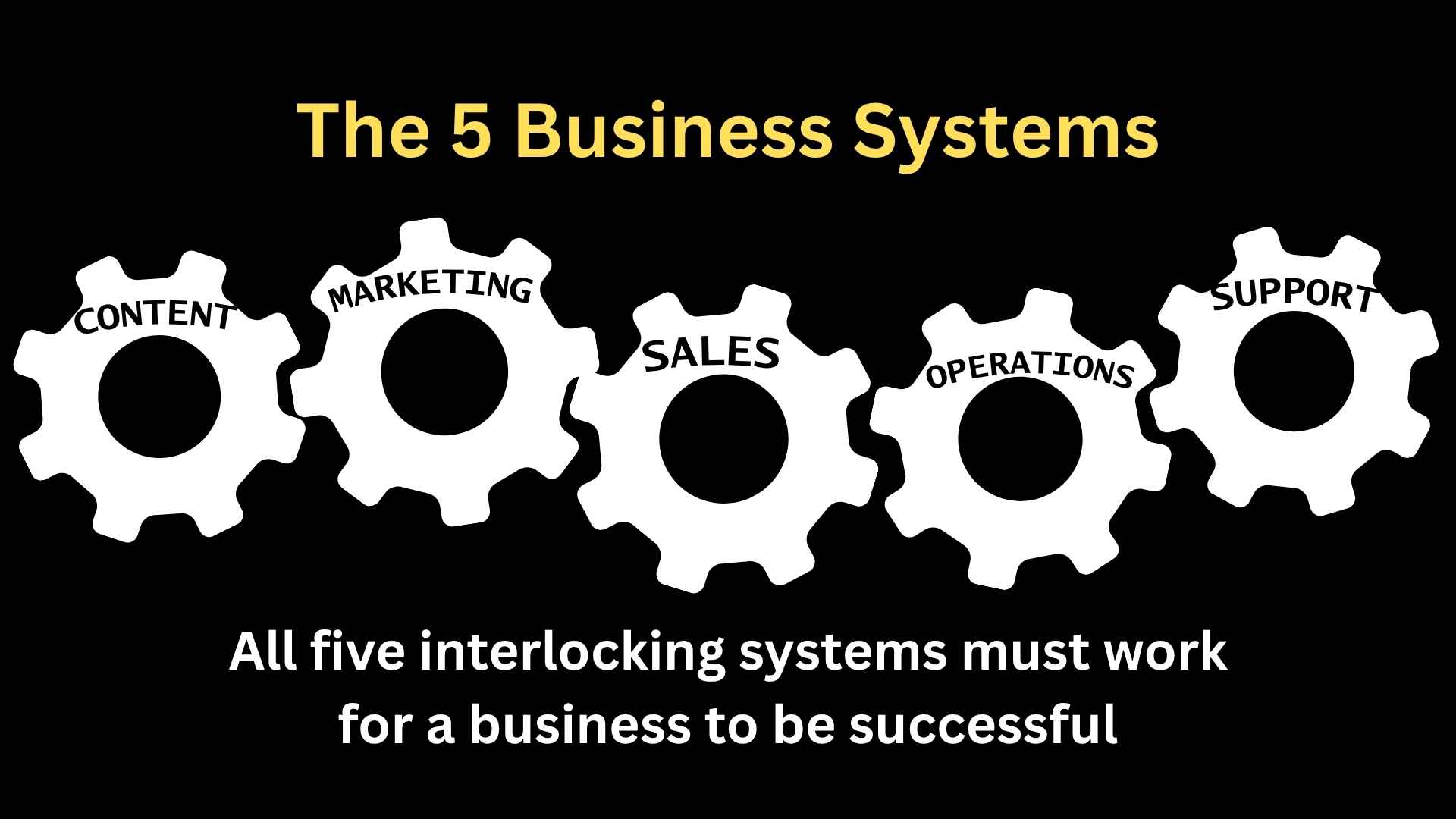
The Interlocking Mechanism: A profitable practice relies on five co-dependent systems: Content, Marketing, Sales, Operations, and Customer Care. If any single cog fails, the whole enterprise stalls.
"Every Company Is a Media Company": Coined by Tom Foremski and widely demonstrated across modern industry, business viability hinges on attention. Without publishing high-value educational content, clinical expertise remains undiscovered.
Conversion and Retention: Clinical excellence only delivers commercial success when paired with ethical conversion protocols (Sales) and structured post-procedural engagement (Customer Care) that drives reviews and referrals.
Contents Summary
The Clinician’s Blind Spot: Why outstanding procedural technique does not guarantee a full patient diary.
"Every Company Is a Media Company": Examining Tom Foremski’s publishing imperative within private healthcare.
The 5 Interlocking Systems Detailed: Breaking down Content, Marketing, Sales, Operations, and Customer Care.
Systemic Friction Points: Diagnostic analysis of clinic bottlenecks (the broken cog problem).
Deep-Dive Video Masterclass: Structured walk-through of clinic business architecture.
Frequently Asked Questions (FAQs): Key answers on balancing clinical governance with commercial growth.
About the Author: Clinical background and expertise of Dr Haroun Gajraj.
The Clinician’s Blind Spot: Why Technique Alone Is Not Enough
When medical practitioners set out to establish or expand a private aesthetic vein clinic, their focus naturally gravitates towards procedural mechanics. We spend tens of thousands of pounds on duplex ultrasound machines, investigate the latest wavelengths in thermocoagulation, and obsess over cannulation angles and sclerosant concentrations.
Clinical competence is foundational and non-negotiable. Without meticulous technique, strict adherence to safety standards, and robust patient governance, no clinician has any mandate to practise.
However, clinical mastery in isolation does not build a viable business. Over several decades of private vascular practice and mentoring practitioners, the most frequent failure mode I observe is an acute over-investment in Operations (the delivery of the treatment) alongside an almost total neglect of the upstream systems: Content and Marketing.
A sustainable, profitable clinic operates as an integrated commercial engine powered by five distinct, interlocking systems:
Content
Marketing
Sales
Operations
Customer Care
These systems are not independent, optional modules. They behave like the gear train of a watch: each cog must mesh seamlessly with the next. If one gear slips or jams, the entire mechanism grinds to a halt.
"Every Company Is a Media Company"
In the mid-2000s, Silicon Valley journalist and former Financial Times correspondent Tom Foremski articulated an observation that has since become a governing law of modern enterprise:
Back in the late 2000s, former Financial Times journalist Tom Foremski coined an insight that reshaped modern business thinking: "Every company is a media company" (a concept later expanded and popularised by Gary Vaynerchuk).
Foremski's core argument was that the internet dismantled traditional distribution monopolies. To remain commercially relevant, an enterprise cannot simply produce a good or service; it must master the creation and distribution of media to earn and retain customer attention.
In private medical and aesthetic practice, this reality is brutal. Prospective patients do not browse directory listings or wait for hospital referrals to treat aesthetic concerns. When faced with unsightly leg veins or facial telangiectasias, they reach for search engines, watch explanatory videos, scroll through social media platforms, and read educational newsletters.
If you do not produce authoritative, patient-facing media, your clinical expertise remains the best-kept secret in your catchment area. Outstanding needle technique delivered in an empty clinic room helps nobody.
The 5 Interlocking Systems Detailed
To build a resilient and predictable practice, clinicians must step back from the treatment trolley and evaluate each of the five core pillars:
1. Content (The Educational Foundation)
Content represents your clinic's intellectual capital and clinical authority made public. It anticipates and answers the practical questions prospective patients are actively researching:
What causes thread veins to flare up?
Is microsclerotherapy painful, and how many sessions will I need?
What does normal post-treatment healing and bruising look like?
Authoritative written articles, procedural demonstrations, clear anatomical infographics, and structured clinical guidance demystify treatment pathways, establish professional trust, and set objective clinical expectations before the patient ever sets foot in your clinic.
2. Marketing (The Distribution Engine)
Creating educational content is pointless if it sits unread on a dead webpage. Marketing is the distribution machinery that ensures your media reaches prospective patients. This encompasses:
Organic Search (SEO): Optimising clinical articles for local queries.
Email Marketing: Nurturing an interested subscriber base with regular, high-value newsletters.
Social Media & Video Distribution: Sharing video breakdowns and clinical observations where your target demographic gathers.
Targeted Digital Advertising: Amplifying primary educational assets to local geographical segments.
3. Sales (Ethical Triage & Conversion)
In medicine, practitioners often shy away from the term "sales." However, in a private clinical environment, sales is simply the ethical process of guiding an anxious enquiry into an informed, booked consultation.
This system encompasses how promptly telephone enquiries are answered, the clarity of your fee structure and treatment pathways, and how effectively your consultation protocol enables the patient to make an autonomous, informed decision without pressure.
4. Operations (Clinical & Procedural Delivery)
This is the area clinicians are most comfortable with: clinical protocols, room preparation, sterile supply logistics, duplex ultrasound competence, cannulation technique, and regulatory compliance (such as CQC registration and clinical audit). Tight operations ensure that treatments are executed safely, comfortably, on time, and with predictable clinical endpoints.
5. Customer Care (The Retention & Advocacy Loop)
The patient journey does not terminate when compression hosiery is applied or the dressing is placed. The fifth system governs:
Proactive post-treatment check-ins at 24 and 48 hours.
Transparent handling of minor, expected side-effects (e.g. phlebitis, haemosiderin pigmentation) before they turn into patient anxiety.
Structured follow-up intervals and outcome assessments.
Systematic collection of patient feedback and online reviews.
Robust customer care closes the loop, transforming one-off patients into long-term practice advocates who supply a steady stream of organic word-of-mouth referrals.
Systemic Friction Points: The Broken Cog Problem
When any single system is neglected, practice performance deteriorates rapidly:
Superior Operations + Zero Marketing: You deliver exemplary sclerotherapy results, but your treatment diary remains sparsely populated and unpredictable.
Aggressive Marketing + Inadequate Sales/Operations: Enquiries flood in, but delayed telephone responses or disorganised clinic appointments cause high drop-off rates, poor patient reviews, and clinician burnout.
Superb Conversion + Neglected Customer Care: Patients complete an initial treatment course but receive poor post-procedural communication. Lacking guidance during recovery, they do not return for maintenance or refer their friends and family, requiring you to spend continually to acquire new leads.
Predictable clinic growth is not achieved by working more 12-hour days in the treatment room. It is achieved by constructing and refining these five systems until they function smoothly as an integrated unit.
Watch the Video: The 5 Systems in Practice
I have recorded a video breakdown about each of these five systems, explaining how they interface with daily clinical workflows and how healthcare professionals can implement them without becoming overwhelmed by administrative friction.
Watch the full analysis on YouTube:
Watch: The 5 Systems to Build a Profitable Vein Clinic
Frequently Asked Questions
Why should a medical practitioner spend time creating media?
Patients actively seek clear, authoritative clinical information online before choosing where to undergo cosmetic or medical treatments. If you do not produce educational media, you cede visibility to clinics that do, regardless of their relative clinical competence.
How does "sales" align with medical ethics and professional standards?
Ethical sales in medicine focuses on education, clarity, and informed consent. It ensures prospective patients receive accurate, transparent information regarding treatment options, realistic outcomes, costs, and risks, enabling them to make the right choice without coercion.
Which system should a new cosmetic vein clinic prioritise first?
While Operations (clinical safety and proficiency) must be secure before accepting a patient, Content and Marketing must be developed concurrently. Without an established distribution mechanism, even the best-equipped clinic will fail to generate consistent bookings.
About the Author
This educational article is written and regularly reviewed by Dr Haroun Gajraj, a GMC-registered vein specialist who has treated thousands of patients with vein disease and has trained many doctors and nurses in microsclerotherapy, radiofrequency thermocoagulation, and related cosmetic vein procedures. Dr Gajraj is the founder and board member of the British Association of Sclerotherapists. You can view his current GMC registration and independent patient reviews on iWantGreatCare for further information about his clinical background.
Clinicians remain responsible for assessing each patient, obtaining informed consent, explaining risks and alternatives, and working within the scope of their professional registration and regulatory guidance.
Subscribe
For regular updates get my weekly newsletter here
© VeinCare Academy | Dr. Haroun Gajraj | veincare.academy
This article is intended for qualified healthcare professionals. All clinical decisions should be based on individual patient assessment, primary medical literature and current professional guidelines.